
NEW LARGE PREHISTORIC SHARK DISCOVERED
Megalolamna paradoxodon is the name of a new extinct shark described by an international research team who based their discovery on fossilized teeth up to 4.5 centimeters tall found from the eastern and western United States (California and North Carolina), Peru and Japan.
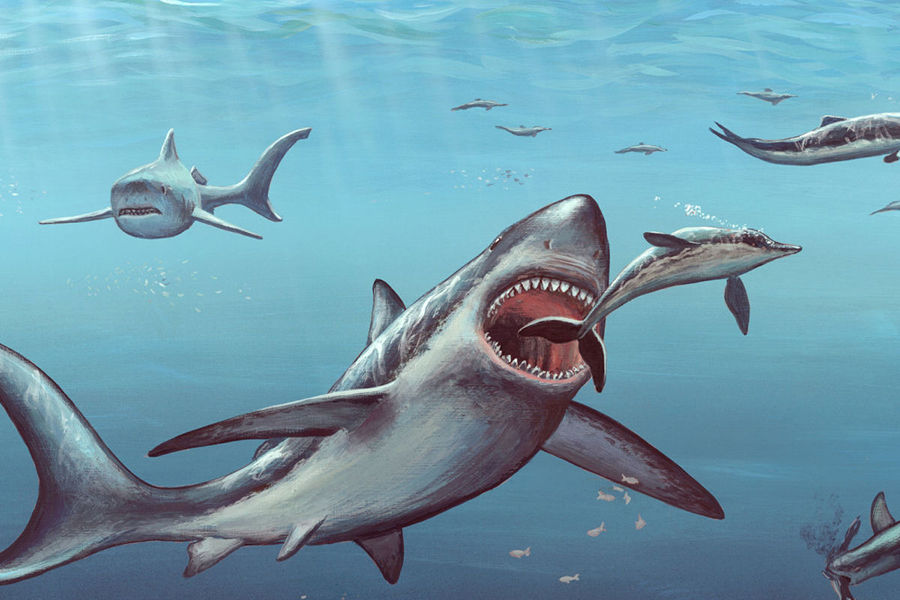
The newly identified fossil shark lived during the early Miocene epoch about 20 million years ago and belongs to a shark group called Lamniformes, which includes the modern-day great white and mako sharks.
Megalolamna paradoxodon represents a close cousin of the megatoothed lineage, said Kenshu Shimada, a paleo biologist at DePaul University and research associate at the Sternberg Museum in Kansas. Certain dental features suggest its otodontid affinity, but in many other aspects, teeth of the new fossil shark look superficially like over-sized teeth of the modern-day salmon shark that belongs to the genus Lamna - hence the new genus Megalolamna, the researchers noted. The new species name 'paradoxodon,' or paradoxical teeth, comes from the fact that the shark appears to emerge suddenly in the geologic record with a yet unresolved nearly 45-million-year gap from when Megalolamna possibly split from its closest relative Otodus.
Although smaller than members of the megatoothed lineage containing 'megalodon' that reached well over 10 meters, Megalolamna paradoxodon is still an impressive shark estimated to be minimally equivalent to the size of a typical modern-day great white, roughly 4 meters in length. Living in the same ancient oceans megatoothed sharks inhabited, Megalolamna paradoxodon had grasping-type front teeth and cutting-type rear teeth likely used to seize and slice medium-sized fish.
Thanks to: sciencedaily.com


Komentarji